
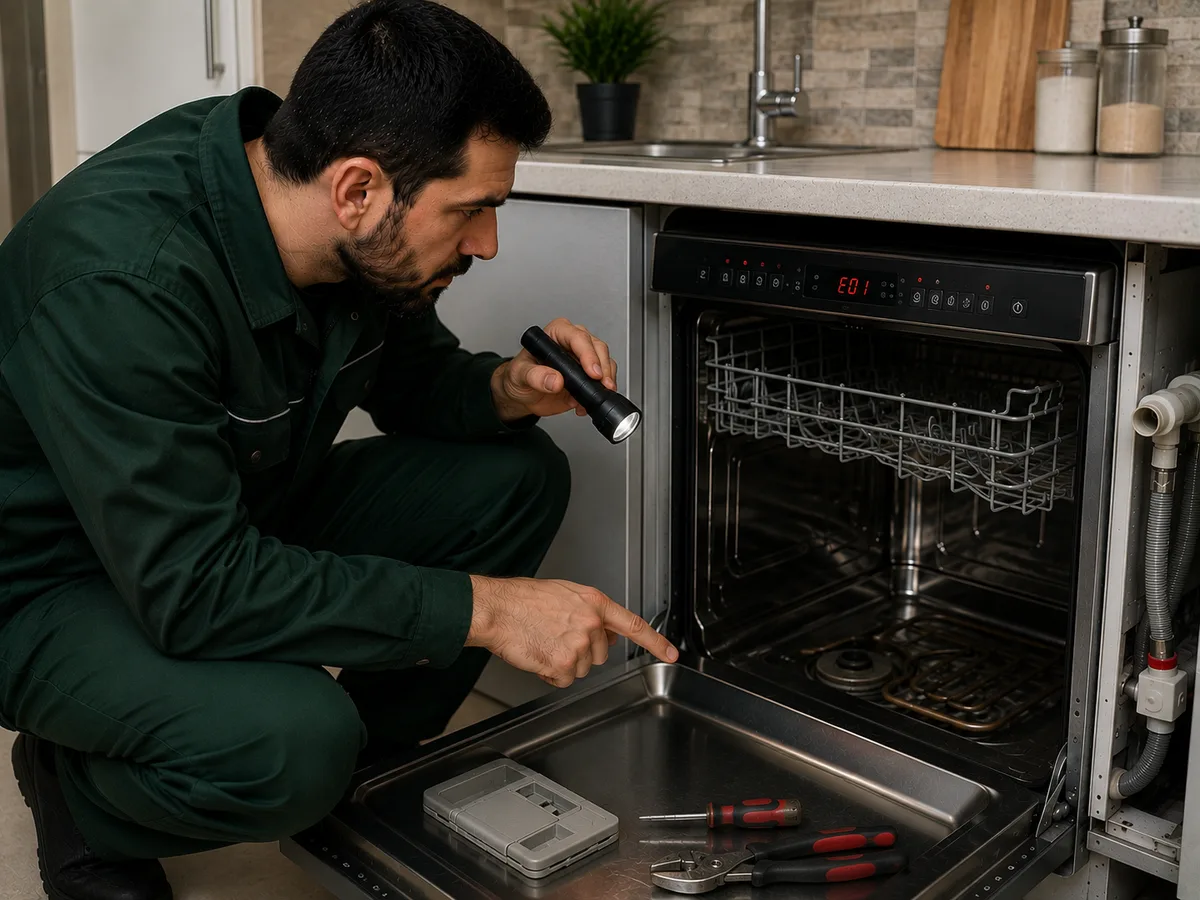
If the dishwasher is not heating the water, this directly affects the quality of the wash. In a properly functioning appliance, the water is heated to a certain temperature depending on the selected program, helping to remove grease, food residue, and other dirt more effectively. If the dishes remain completely cold or greasy after the program ends, or if the washing performance has noticeably decreased, there may be a problem with the water heating system.
First, check the selected wash program. On some dishwashers, quick, eco, or low-temperature programs heat the water less than standard programs. Therefore, before concluding that the dishwasher is not heating the water at all, it is useful to test the appliance with a higher-temperature program.
A faulty heating element is one of the most common reasons why a dishwasher does not heat water. The heating element converts electrical energy into heat and allows the water to reach the required temperature during the wash cycle. If the heating element fails or the electrical circuit is interrupted, the water will not heat up and the entire cycle may continue at a low temperature.
In some dishwasher models, the heating element is integrated with the circulation pump as a single assembly. In these systems, a fault in either the pump or the heating section may affect both water circulation and heating. For this reason, it is important to inspect not only the heating element itself but also the circulation system.
Electrical leakage from the heating element to the appliance body is also possible. In this type of fault, the circuit breaker or residual current device may trip when the dishwasher begins heating the water. Repeatedly restarting the dishwasher in this situation can be dangerous, so the electrical components should be checked professionally.
A faulty temperature sensor can also prevent proper water heating. The sensor measures the water temperature and sends the information to the electronic control board. If the sensor sends incorrect temperature data, the control system may mistakenly assume that the water has already reached the required temperature and switch off the heating element too early.
On the other hand, if the temperature sensor cannot detect the water temperature at all, some dishwasher models may prevent the heater from operating for safety reasons. In such cases, the program may take longer than usual, stop halfway through, or display an error code related to the heating system.
In dishwashers equipped with a thermostat, a thermostat fault should also be considered. The thermostat is one of the components responsible for controlling water temperature. If it fails, the heating element may not receive the correct signal and the water may not reach the required temperature.
A problem with the electronic control board can also cause the heating element to stop working. The control board manages the dishwasher’s water intake, pumps, heater, sensors, and program stages. If the relay or another electronic component responsible for supplying power to the heater is damaged, the water may not heat even if the heating element itself is working properly.
A burnt relay, damaged electronic component, oxidized contact, or moisture-related fault on the control board can completely stop water heating. However, before replacing the electronic control board, the heating element, sensors, wiring, and other related components should be checked.
Damage to the internal electrical wiring and contacts can also prevent electricity from reaching the heating element. Long-term use, high temperatures, moisture, and loose connections may cause wires to overheat, break, or oxidize.
Incorrect water level detection can also prevent the heater from operating in some models. If the dishwasher does not take in enough water, the safety system may prevent the heating element from turning on. This can be caused by a weak water inlet valve, a clogged inlet filter, low water pressure, or a faulty water level sensor.
Poor circulation pump performance can also affect water heating. The pump circulates water through the spray arms and the internal washing system. If circulation is too weak, the electronic system in some models may prevent the heater from operating for safety reasons, or the water may fail to reach the required temperature.
Heavily contaminated filters and poor water circulation can also reduce the dishwasher’s overall washing and heating performance. When food particles and grease build up in the filters, normal water flow becomes restricted. For this reason, the filters should be cleaned regularly.
One sign that the dishwasher is not heating the water is that both the dishes and the inside of the appliance remain cold after the program finishes. In addition, a greasy film may remain on the dishes, detergent may not dissolve completely, and drying performance may become weaker. In some models, an unusually long program can also indicate a fault in the heating system.
A drying problem should not be confused with a water-heating problem. A dishwasher may heat the water normally but still fail to dry the dishes properly. This can be related to the drying system, selected program, rinse aid, or the drying technology used by the appliance. For accurate diagnosis, the entire washing cycle should be considered.
In some cases, the dishwasher heats the water but cannot bring it up to the required temperature. A weakened heating element, incorrect readings from the temperature sensor, excessive water intake, or a fault in the electronic control system may cause the water to remain only warm.
If the dishwasher is not heating the water, repeatedly running high-temperature programs will not solve the problem. On the contrary, if there is an electrical or electronic fault, continuing to use the appliance may cause damage to other components.
Pay attention to the following signs: if the dishwasher does not heat the water at all, the dishes remain completely cold after the program, washing performance has significantly decreased, the program takes unusually long, an error code appears on the display, the circuit breaker trips, or there is a burning smell, do not attempt to work on the internal electrical components yourself. Checking the heating element and other parts while the appliance is connected to electricity can be dangerous.
If the dishwasher is not heating the water, it is recommended to contact a professional dishwasher repair technician. The technician can diagnose the appliance and check the heating element, temperature sensor, thermostat, circulation pump, water inlet system, internal wiring, and electronic control board. Once the exact cause of the fault has been identified, you will be informed in advance about the required repairs and their cost.